Market Whiplash: Presidential Rhetoric or Calculated Manipulation?
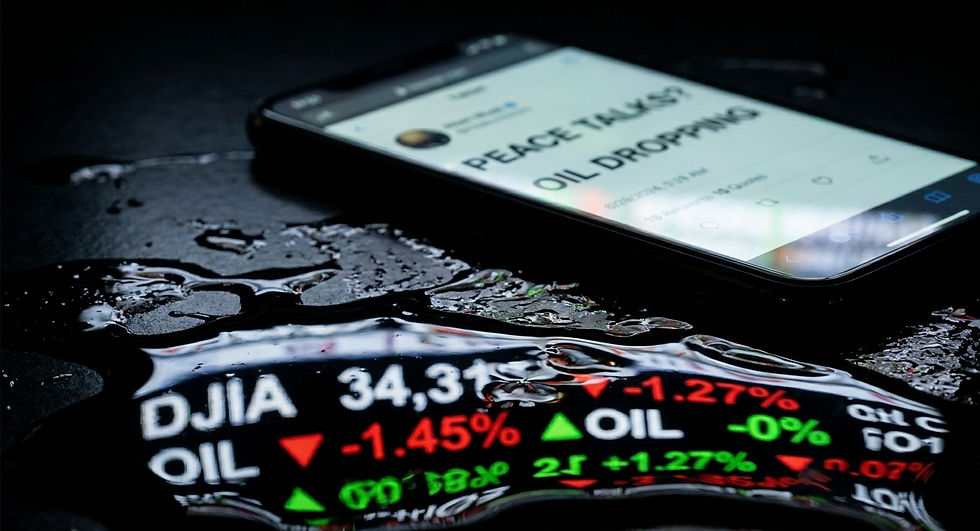
In the fast-moving landscape of March 2026, the global economy isn't being moved by traditional indicators like earnings reports or manufacturing data. Instead, it’s being jerked around by a single social media account. Over the past few weeks, we have witnessed a masterclass in how presidential rhetoric regarding the Iran War and the Strait of Hormuz can trigger billions of dollars in market swings within minutes.
But as these "flip-flops" become a regular occurrence, a darker question is emerging: Is this just the "Art of the Deal," or is it a calculated form of market manipulation?
The Anatomy of a Market Swing
Take the events of late March. Global markets were repeatedly sent into tailspins following chilling ultimatums: Iran had 48 hours to reopen the Strait of Hormuz, the world’s most vital oil artery, or face the "obliteration" of its power plants.
The Dip: These threats invariably caused oil futures to surge toward $120 a barrel, while Asian and European stock indexes plummeted.
The Pivot: Just before U.S. markets opened, however, the President would post that he was delaying the strike because of "productive and very good conversations" with Tehran.
The Recovery: The Dow Jones Industrial Average would immediately jump, often over 1,000 points. Brent crude, as the President noted, "dropped like a rock," falling 10% in single sessions.
This pattern has become a signature of the 2026 administration: generate a crisis, wait for the market to bottom out, and then "resolve" the crisis with a tweet.
Date | Presidential Action/Statement | Market Impact (Dow) | Oil Price Impact |
March 21 | Threatened to "obliterate" Iran power plants. | -850 pts (Futures) | +$15/barrel |
March 23 | Postponed strikes; claimed "peace talks." | +631 pts (Close) | -$12/barrel |
March 26 | Warned Iran "it won't be pretty" if no deal. | -300 pts (Live) | +$4/barrel |
"Fake News" or Financial Strategy?
The controversy isn't just about the volatility; it’s about the source of the information. While the White House claims negotiations are led by Vice President JD Vance and Steve Witkoff, the Iranian Foreign Ministry has repeatedly issued flat denials that any talks are even taking place.
Iranian Parliament Speaker Mohammad Bagher Qalibaf went as far as to call the President's claims "fakenews used to manipulate the financial and oil markets." This sentiment is starting to echo in Washington. Critics point to the administration’s history, including the April 2025 "Tariff U-turn," where the President encouraged supporters to buy stocks just hours before reversing a trade war policy—an act that sent Trump Media & Technology Group (DJT) stock up 22%.
The Ethical Quagmire
The legal reality is that a President has broad immunity regarding their public statements.
However, the STOCK Act was designed to prevent federal officials from profiting off non-public information. If the "peace talks" being touted on Truth Social are indeed non-existent, merely tools to cool an overheating energy market, we are entering uncharted ethical territory.
When the President says, "The price of oil will drop like a rock... I guess it already is today," he isn't just observing the market; he is commanding it.
"We are seeing a conflict where energy and economics are being used as weapons—not just against the enemy, but against the volatility of the ticker tape." — Behnam Ben Taleblu, FDD Senior Director.
Protecting Your Portfolio
For the average investor, this environment is a nightmare. The "feces firehose" of news makes it impossible to distinguish a genuine geopolitical shift from a strategic market-calming tweet.
Ignore the Ultimatums: History shows that the "48-hour deadlines" are often flexible.
Watch the Intermediaries: Don't trust the social media posts; look for confirmation from neutral mediators like Pakistan or Turkey.
Hedge Against Volatility: In a world where the President can move the Dow 1,000 points with a single thumb-tap, traditional "buy and hold" strategies are being tested like never before.
The war in Iran is real, but the market movements surrounding it are increasingly feeling like a scripted performance. In 2026, the most important economic indicator isn't the Fed, it's the President's notification bell.


Comments